THE DIGITAL SAFETY GAP: Why Online Violence Demands Global Attention Now
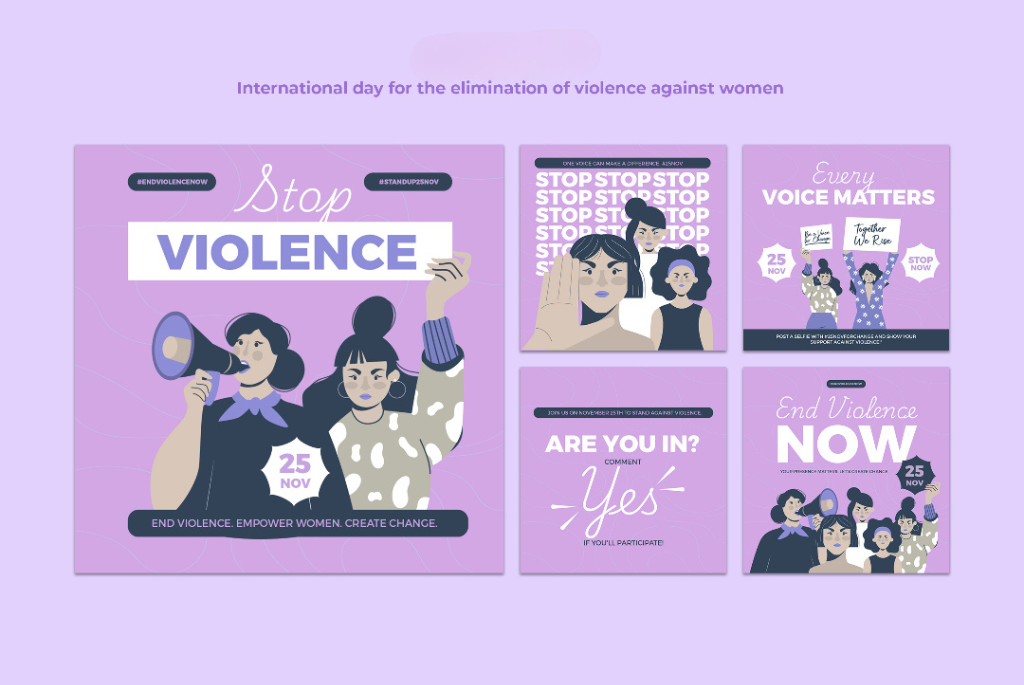
25th November, the International Day for Elimination of Violence against Women to support the 16 Days of Activism against Gender-Based Violence
For centuries, violence was thought of as something physical — something that happened behind closed doors or in unsafe streets.But the world has changed. Today, a large part of violence is happening where most people spend their time:
The internet has become the world’s largest shared environment — a place where we work, learn, express, connect, and create.
Yet alongside these opportunities lies an increasingly urgent challenge:
Digital violence
A form of harm that is instantaneous, borderless, scalable, and often invisible. One that disproportionately affects women and girls, especially those who are young, publicly visible, or navigating vulnerable circumstances.
Here’s a truth we rarely acknowledge:
Digital violence doesn’t begin with abusive posts.
It begins with the digital culture we create — every click, comment,
forward, and silence.
Digital violence is not a side effect of the modern world;
it is a central safety issue shaping the future of human rights, mental health, social participation, and equality.
1. What Digital Violence Really Means Today
Digital violence goes far beyond rude comments or disagreements online.
It encompasses a wide spectrum of behaviours, such as:
- Persistent harassment and hostile messaging
- Non-consensual sharing of personal information or images
- Doxxing and exposure of private data
- Online stalking through digital tools
- Impersonation or identity theft
- Edited screenshots or fabricated evidence
- AI-created deepfake images or videos
- Digital blackmail
- Coordinated trolling or mob attacks
- Manipulation, intimidation, or public shaming
This form of violence often escalates quietly, unnoticed by those outside the experience — yet it leaves deep emotional scars.
2. Why Digital Violence Is Different from Traditional Harm
Digital spaces amplify harm in ways earlier forms of violence never could.
A. Speed
Content spreads instantly, reaching thousands or millions before anyone can intervene.
B. Permanence
Digital traces can reappear years later, impacting careers, mental health, relationships, and reputation.
C. Anonymity
Hidden identities reduce accountability, encouraging behaviours people might never display offline.
D. No geographical boundaries
A person can be harmed from across the world, complicating reporting and response.
E. Technological precision
Harm can now be customised using AI — targeting individuals with disturbing accuracy.
F. Psychological intensity
Research shows that online humiliation activates the same neural pathways as physical pain.
Digital violence is not trivial or imaginary — it is a serious form of harm that must be treated with urgency.
3. The Human Impact: More Than an Online Incident
Behind every incident of digital abuse is a person dealing with consequences the world often overlooks.
Emotional consequences
- Anxiety, fear, or hypervigilance
- Loss of confidence or self-esteem
- Social withdrawal
- Disturbed sleep and focus
- Fear of digital participation
- Trauma-like symptoms
Social consequences
- Silence in public conversations
- Self-censorship
- Loss of opportunities
- Isolation from communities
- Reduced engagement in education or work
Digital violence affects identity, opportunity, and well-being — touching every corner of a person’s life.
4. The Growing Threat of AI-Driven Harm
Artificial intelligence is rewriting the nature of digital safety.
Today, anyone can create:
- Deepfake images indistinguishable from reality
- Cloned voices that mimic individuals
- Fabricated chats that appear authentic
- Automated harassment using bots
- AI-edited explicit content
- Highly targeted misinformation
These tools make it easier than ever to manipulate, shame, or psychologically harm someone — often without leaving a clear trail of accountability.
The risks are rising faster than legal and technical systems can respond.
If we do not act now, digital violence could shape:
- Who feels safe online
- Who participates in public life
- Who gets opportunities
- Who remains silent
The digital world is being programmed every day —
and the question is: Are we programming safety or harm?
5. Why Digital Safety Must Be a Collective Priority
Digital violence affects far more than individual lives.
It impacts:
- freedom of expression
- civic participation
- mental health in communities
- trust in digital systems
- Equality and inclusion
- safety in online public spaces
A digital environment that normalizes harm becomes unsafe for everyone.
Ensuring safety online is not just a women’s issue, a youth issue, or a technology issue —
it is a societal responsibility.
6. Building Safer Digital Environments: What Must Change
Preventing digital violence requires awareness, empathy, policy, technology, and community action working together.
A. Strengthening Digital Awareness
- Learn to recognise harmful behaviours early.
- Understand privacy settings and digital rights.
- Avoid forwarding or engaging with harmful content.
B. Encouraging Empathy in Online Communication
- Choose respectful interactions, even during disagreements.
- Avoid participating in or amplifying online shame.
- Support those experiencing harm
C. Improving Digital Education
- Make digital citizenship a core part of learning.
- Include discussions on consent, privacy, deepfakes, and AI risks.
D. Advancing Technology Governance
- Stronger safeguards against deepfake creation
- Transparent platform moderation systems
- Faster reporting and takedown processes
- Ethical AI frameworks to prevent misuse
E. Strengthening Legal and Policy Support
- Modernized cyber laws that reflect today’s threats
- Clear processes for reporting digital abuse
- Cross-border cooperation for global crimes
- Strong protection for victims and whistle-blowsers
F. Building Community Readiness
- Encourage non-judgmental responses
- Empower people to speak up
- Break stigma around digital harm
- Create supportive spaces online and offline
Digital safety is not achieved through one action — it is created through continuous, collective effort.
7. Silence Intensifies Harm — Awareness Reduces It
Digital violence thrives where:
- harmful behaviour goes unquestioned
- victims are blamed
- harmful content is shared without thinking
- communities lack digital literacy
- Systems for reporting are unclear
Awareness is not merely educational —it is a protective shield.
Every informed individual contributes to reducing harm.
Every responsible digital choice helps reshape culture.
8. A Shared Commitment for a Safer Digital Future
The 16 Days of Activism remind us that preventing violence — in any form — requires deliberate intention and shared responsibility.
As digital platforms shape the future of communication, creativity, work, and societal participation, ensuring safety in these spaces becomes critical for progress.
A safer digital world is built through:
- informed users
- responsible technology
- strong policies
- empathetic communities
- ethical innovation
- Collective vigilance
The culture we create online today will determine the safety of generations to come.
Let us choose to build a digital world where dignity is protected, harm is challenged, and every person feels safe to exist, express, and participate fully.
9. A Call to Action: Your Digital Choices Shape the Future
Every reaction we make,
every piece of content we amplify,
every moment we choose to speak up or stay silent —
is writing the code of tomorrow’s digital world.
So the question becomes:
What kind of world do we want the next generation to inherit?
One where fear spreads faster than facts?
Or one where safety, dignity, and respect are the foundations of online life?
Let our answer be clear:
We choose awareness.
We choose responsibility.
We choose digital spaces where everyone feels safe.
The 16 Days of Activism is not just a global movement —
it is a reminder that transformation begins with awareness
and continues through action.
The digital world is being shaped every day.
Let us shape it into a space where safety is the rule, not the exception.
#16DaysOfActivism #OrangeTheWorld#EndGenderBasedViolence #UNiTE #DigitalSafety#StopOnlineViolence
This blog supports the spirit of the global 16 Days of Activism movement, advocating for safer digital environments.